The Project
The EMoCC project is a Cooperation partnership in vocational education and training co-funded in 2021 under the Erasmus + Key Action 2 Cooperation among organisations and institutions. It is managed by the Italian Agency INAPP (Grant Agreement nr.2021-1-IT01-KA220-VET-000030154).
The need
Why is European job mobility so low despite the huge efforts carried out by European Union to promote it?
A greater labour force mobility, both occupational than geographical, contributes to economic and social progress, to a higher level of employment, and to a balanced and sustainable development. It also enables more efficient adaptations to labour market changes and can act as a catalyst for both a closer political integration and the social inclusion of disadvantaged individuals. UE promotes and supports European job mobility through a consistent variety of information and advisory services. The percentage of citizens who’ve moved to another Member State has indeed grown over time but is still restrained and had (already before the pandemic) slowed down its pace in the last years.


On one side, relocating abroad for work can be psychologically demanding: not only logistic, administrative and linguistic burdens come into play, but also individual attitudes and adaptation skills towards different cultural and professional contexts. However, very often these last factors are given for granted or omitted within mobility advisory centers, while they should deserve a greater attention since they can make the difference between an aware and effective mobility choice versus a short-sighted and a failure one.
On the other side, career counselors could be precious allies for individuals in their professional paths and choice processes, but there is still an insufficient and vague knowledge about mobility topics among European professionals providing job advisory and career counselling. Even more, training in career counselling itself is extremely diversified among Member States and often accessible only at tertiary level education: as a consequence, job guidance services are often informally delivered by operators who never went through any training in career counselling at all.
The objectives
What can we do to promote it?
To concretely support geographical mobility, it is first of all essential to investigate and understand the individual and often unaware personal factors that may foster or vice versa obstacle one’s mobility choice. European studies have already explored administrative aspects likely to hinder European citizens’ mobility, while European surveys have provided important suggestions on push and pull factors of people’s moves. The scientific community invites to go further and to pay attention to personal attitudes and skills as crucial factors for a successful and sustainable mobility.


Once developed, this knowledge should be embedded in current career counseling training courses, to integrate counselors’ expertise with specific understanding on which potentials and criticalities are at stake when moving abroad. Furthermore, this knowledge would benefit also those professionals who offer counseling services without being previously trained in career counseling: think only at the hundreds of reception and integration centers operators who in Europe support migrants to find a job in Europe. If in most cases they do job counseling with no theoretical background, it is also true that very often they witness remarkable mobility stories that can reveal us a lot about mobility dilemmas and necessary skills.
The results
How can we measure one person’s attitude and skills toward mobility?
Successes and failures, both in moving abroad for work and just considering it, are probably the best source of information on the reasons, resources, and barriers for moving.
The first project result will so be a RESEARCH made up of two different investigations:
- the qualitative study “AToM -Attitude Toward Moving” will explore personal attitude and motivation to work mobility by means of individual interviews and focus groups to be carried out in Italy, Germany, France and Spain
- the quantitative study “WoMSA Scale -Work Mobility Skills and Attitude Scale” will develop and test a questionnaire to provide individuals and career counsellors with a better knowledge of the starting “suitability to move” of their clients.
Find out more on this project result

Which expertise should a European Mobility Career Counsellor have?
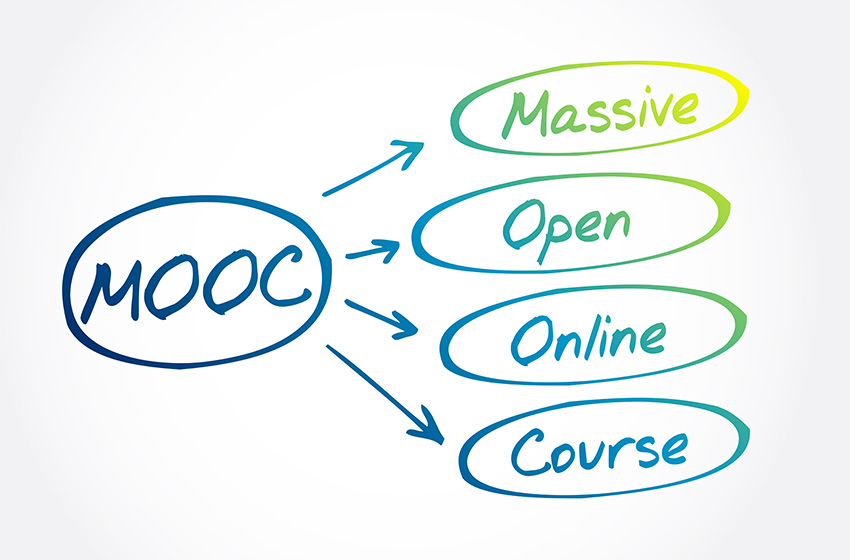
The outcomes of the research will be the starting point of 2 different TRAININGS in forms of Massive Open Online Courses.
The second project results “MOOC for Career Counselling Providers” will provide a 30-hour-training on basic career counselling skills for those professionals who, within their broader professional role, provide formal and/or informal career counselling and guidance services (eg. social workers, youth tutors, operators working with asylum seekers and refugees, advisors, employers of associations and trade unions). The MOOC will pay particular attention to professionals working with individuals with migratory or mobility background or aiming to move abroad for work.
Find out more on this project result
The third project result “European Mobility MOOC” will equip Career Counselors Experts with skills and attitudes functional to support people who are considering or could benefit by work mobility at European level. This 30-hour-training will address several topics such as social and cross-cultural sensitiveness, biased attitudes that stereotype others by race and culture, understanding the role of educational and vocational guidance in assisting migrants to successfully resettle in their destination countries, European networks and services to move abroad.
Find out more on this project result