
Newsletter 7 – December 2024
Spreading the word on the EMoCC project:
the Final Congress took place
in Milan on December 12th, 2024!
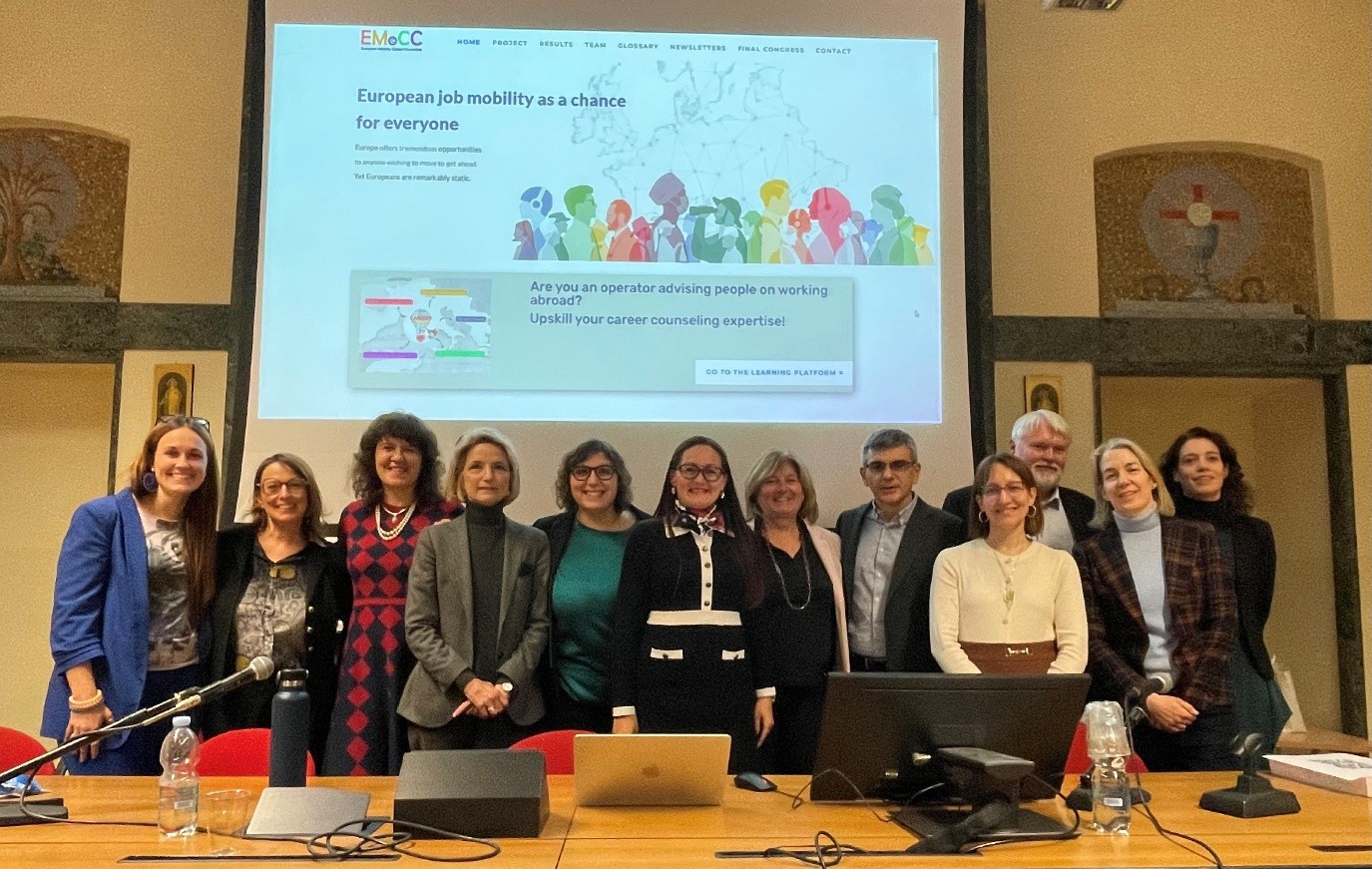
Job Mobility is a key issue in Europe and a main asset in a professional career
The EMoCC project was initiated and led by the Università Cattolica del Sacro Cuore (UCSC, Milano, Italy) together with the University of Applied Labour Studies Mannheim (HDBA, Mannheim Germany), an organisation specialising in youth mobility (ESMOVIA, Valencia, Spain), an organisation working for the social and professional inclusion of migrants and refugees (Tuer an Tuer, Augsburg, Germany) and the Institute for lifelong learning (iriv, Paris, France).
This 34-month project (28 Feb 2021 – 27 Dec 2024) was meant to upskill career counsellors and better equip any professional guiding people in their transition to the labour market. Mobility is a main opportunity for youngsters involved in the Erasmus + programme, for professionals sent by their companies or people who were forced to leave their country (refugees, asylum seekers). The first part of the EMoCC project was dedicated to a research study. The second part was meant to design and test a first Massive Open Online Course (MOOC) focused on a general orientation counselling. The third part was dedicated to a second MOOC tackling mobility/expatriation through the many facets of diversity and the barriers/obstacles that may be generated
After an overview of the project process, this issue summarizes the final Congress held in Milan in December 2024 and the sustainability of the EMoCC project.
Carrying out the survey – from focus groups (ATOM) to a questionnaire for identifying a profile of mobility (WoMSA)
The EMoCC provides both an initial (for beginners) and continuous (for experienced) professional development to career counsellors in work-based settings. It addresses both a direct public, composed of career counsellors; and a final or indirect public composed of the clients of the career counsellors- any candidate to mobility/expatriation. The target groups are composed of a variety of counsellors in diverse delivery networks providing career guidance – without any formal training who would require or with an expertise in mobility willing to improve their knowledge and competence both in mobility and career counselling. The stakeholders are composed of professionals in several organizations – eg, among others, national employment agencies (EURES network), Human resources (in firms with expatriates), VET providers (focusing on mobility).
In a first step, a qualitative study was conducted in the 4 countries among 4 target groups (students, expatriates, refugees and people who didn’t achieve a mobility plan). In a second step, a questionnaire was designed as a practical tool for designing a personal profile on the motivations, competences, expected satisfaction, needs and preconditions to succeed in a professional mobility/ expatriation. It is available on:http://emocc.eu/womsa/.
Designing the online courses – MOOC for career counselling & a MOOC for career counsellors specializing in mobility
A first MOOC provides a basic knowledge and relevant methods useful for delivering career counselling. A second MOOC was more focused on mobility and diversity. Both MOOCs are available freely till 2030 at the following link https://app.emocc.eu.
A certificate of attendance is automatically delivered to participants upon completion of two levels of quizzes assessing the knowledge and skills achieved by the user. A third level assessment will be made available through the EMoCC key contacts in the 4 countries upon payment of a fee.
The final sprint: disseminating the project between 2023 and 2024
A series of multiplier events were held in the 4 countries to involve meaningful stakeholders in organizations specializing in both career counselling and mobility.
- Valencia (2023) – the Spanish team was the first to hold a meeting in February 2023 that could gather local, national and European stakeholders with a rich network in Valencia.
- Rennes (2023) – the French team organized a first meeting in Rennes (Brittany) in June 2023 thanks to a partnership with the World Trade Center (WTC) in Rennes
- Mannheim (2024) – the German team held a meeting in Mannheim in March 2024 at the HDBA with key stakeholders such as the Eures in Germany.
- Rennes (2024) – the French team organized a second meeting in Rennes in May 2024 thanks to a new partnership with the Center for International mobility (CMI), a unique place.
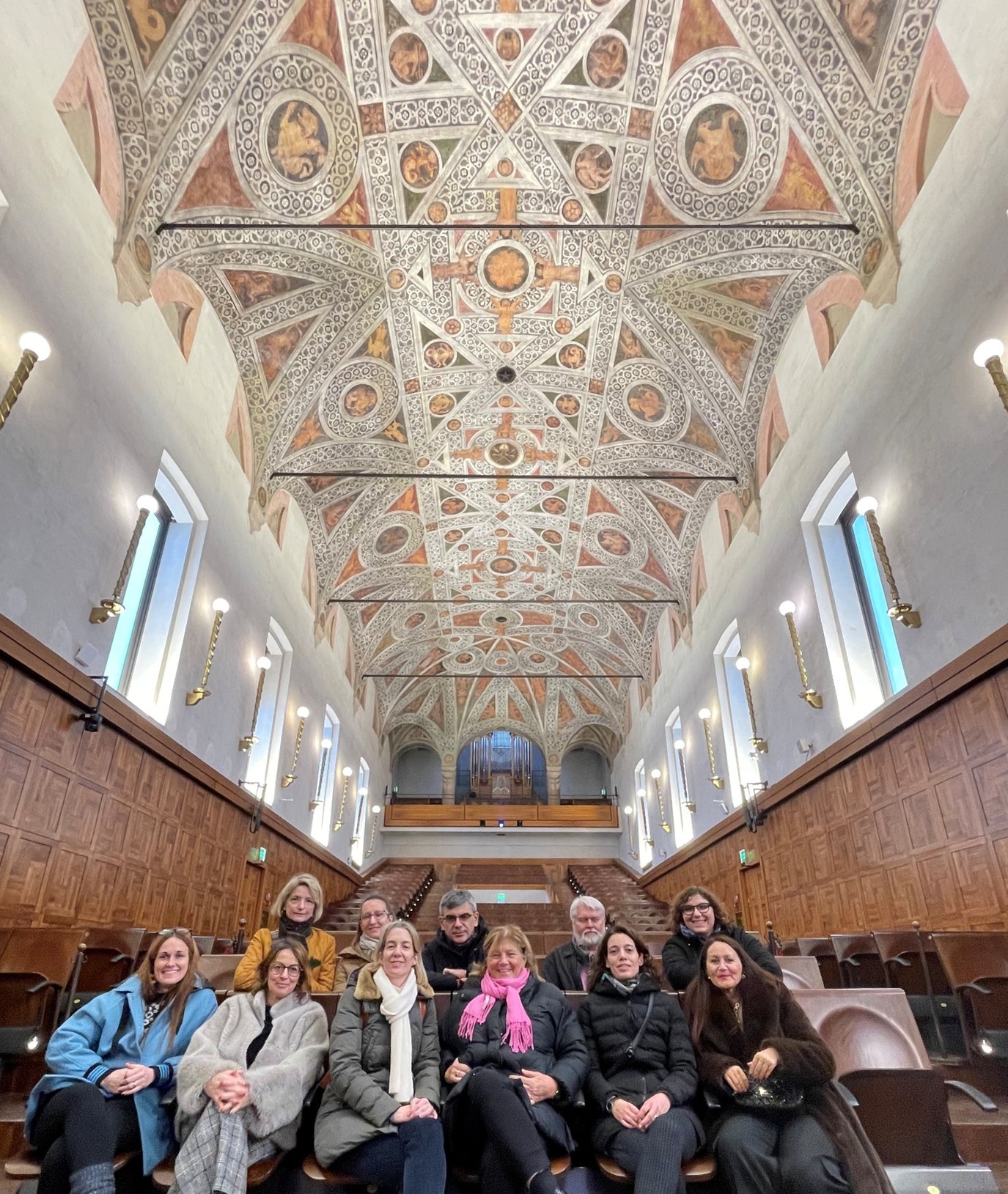
- Milan (2024) – In December 2024, the EMoCC team gathered in Milan to present the results of their project – a global overview of the goals and outcomes of the project, an in-depth analysis on three specific topics.
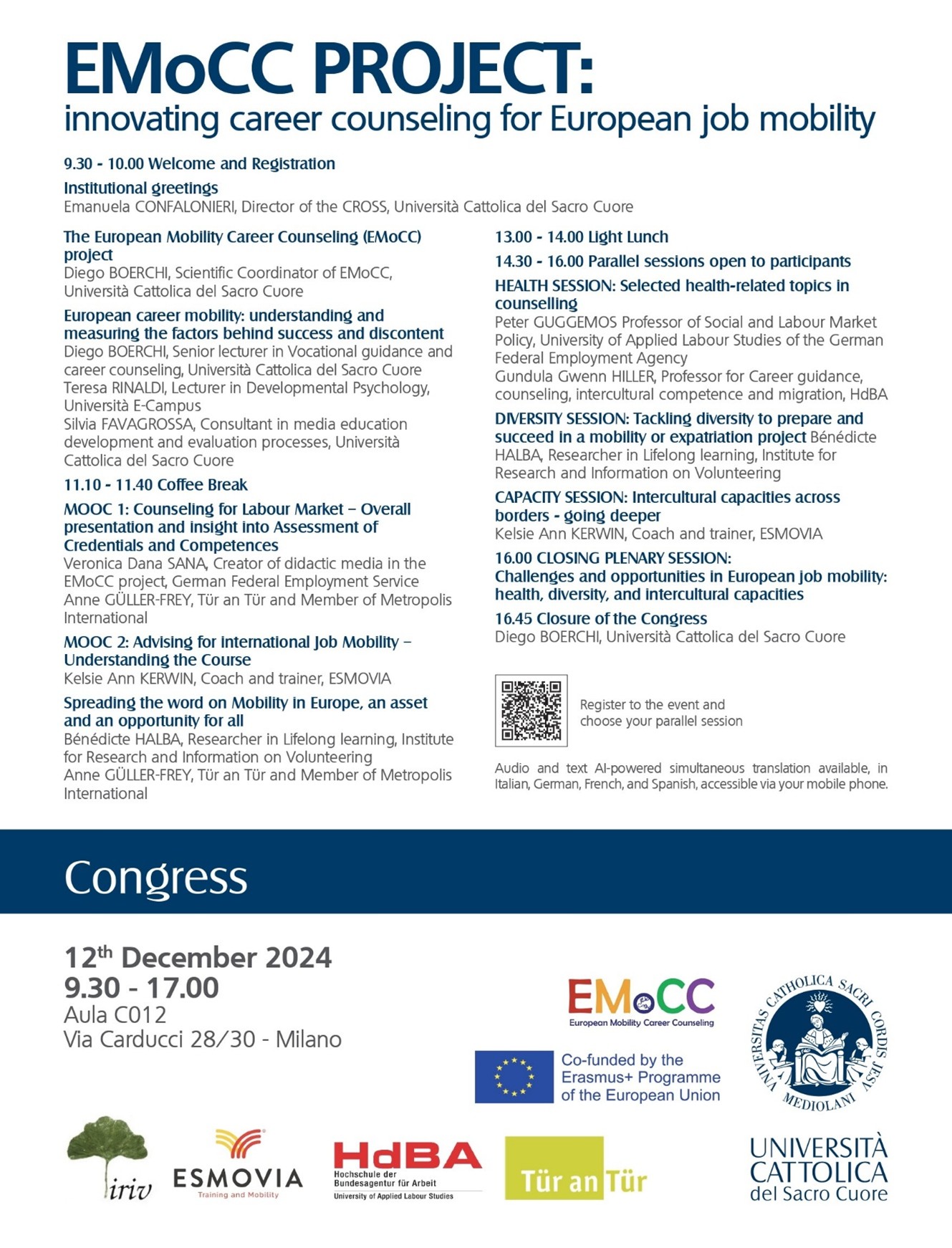
The event, titledEMoCC Project: innovating career counseling for European Job Mobility involved the whole team on the respective project results.
- Italian team: the WoMSA Scale as main output of the qualitative and quantitative study carried out
- German team: the first MOOCCounseling for Labour Market, with a focus on the Skills Assessment.
- Spanish team: the second MOOCAdvising for International Mobility.
- French team: a sustainability strategy for the future as a catalyst of European Mobility
Plenary session
European career mobility: understanding and measuring the factors behind success and discontent
Diego Boerchi, scientific coordinator of EMoCC, Università Cattolica del Sacro Cuore (UCSC) and senior lecturer in Vocational guidance and career counselling (UCSC),Teresa Rinaldi,Lecturer in Development Psychology, University E-campusandSilvia Favagrossa, consultant in media education development and evaluation processes, UCSC, explains theaims and implementation of the first step of the EMoCC – the qualitative (AToM) and quantitative (WoMSA) study carried out and the assessment to be provided for the MOOCs to enhance a demanding quality process.
The European Union offers various opportunities for professional mobility, yet Europe struggles with limited career and geographic movement among its workforces. Understanding the factors that influence these decisions is critical for personal, economic, and societal progress. The EMoCC Project was created to address this challenge by promoting professional mobility through research and practical tools.
The challenge of mobility
Despite the EU’s initiatives, a gap exists in career counseling tools tailored to mobility-related decisions. The EMoCC Project emphasizes the importance of psychological, socio-economic, and cultural factors in influencing mobility decisions. Career choices are shaped by elements such as self-efficacy, personality traits, and societal norms, which often determine an individual’s willingness or ability to move for work.
External key barriers to professional mobility
Several barriers hinder career mobility within Europe. These include occupational mismatches, where skills do not align with labour market demands, and geographical limitations, which restrict access to broader opportunities. Insufficient labour market information complicates decision-making, while demographic shifts, such as an aging workforce, exacerbate challenges. A split labour market, characterized by an oversupply of low-skilled workers versus a demand for high-skilled roles, further compounds the issue.
Individual dimensions affecting international work mobility decisions.
Social Cognitive Career Theory (SCCT; Lent at al, 1994) underscores the role of self-efficacy, expectations, and environmental factors in career decisions. Personality traits, particularly the Big Five dimensions (Personality Trait, McCrae & Costa, 1987; extroversion, conscientiousness, openness to experience, friendliness, and neuroticism), also play a significant role in migration behaviour. Additionally, cultural and policy influences, like societal norms and family proximity, heavily impact mobility decisions.
Insights from the AToM Study
The Attitude Toward Moving (AToM), a study developed inside the EMoCC Project, explored personal resources and barriers to work mobility. Conducted in four countries (Italy, Spain, France, and Germany) with 288 participants through interviews and focus groups, it examined voluntary movers, company-assigned relocations, forced relocations, and non-movers. Participants were an average of 40 years old, evenly divided by gender, and represented diverse motivations and barriers to mobility.
Key insights revealed that decisions to move are influenced by personal aspirations, systemic barriers, and a mix of intrinsic and extrinsic factors. For example, career growth, personal development, and family considerations often motivate individuals to move. At the same time, systemic issues like economic instability or a lack of professional support can deter mobility.
The study highlighted five critical areas of international work mobility:
- Motivationincludes cultural curiosity, career development aspirations, independence, skill improvement, language learning, and relationship-building.
- Competenceemphasizes adaptability, cultural sensitivity, strategic planning, stress management, problem-solving, and effective communication.
- Satisfactionmeasures outcomes such as professional progression, time management, personal growth, and the quality of interpersonal relationships.
- Needsinclude education, job opportunities, family stability, and professional satisfaction.
- Preconditionsinvolve family support, financial resources, professional guidance, and knowledge about the host country.
The WoMSA Scale
The Work Mobility Skills and Attitude Scale (WoMSA) was developed as part of the EMoCC Project to assess readiness for international work. This tool transforms the first three areas of the AToM study’s findings into actionable insights. It evaluates motivations, skills, and satisfaction levels, helping individuals and career counsellors determine whether working abroad aligns with their needs and goals.
During the pilot phase, the WoMSA Scale was tested using online questionnaires, collecting 401 responses from participants across various countries and age groups. Respondents included individuals who had never worked abroad, those who had voluntarily moved, and others forced by external circumstances. The scale’s design included three subscales—Motivations, Competencies, and Satisfaction—with six initial items for each. These were later refined to four items per subscale to enhance reliability and usability.
The WoMSA Scale has significant implications for career counseling and policy development. Strong motivations and competencies are essential for successful mobility, as satisfaction depends on both personal and professional factors. Tailored counseling frameworks can help individuals navigate barriers, while systemic policies addressing demographic shifts and labour market mismatches can promote mobility.
The Counseling Protocols
From the study AToM, we found that the best way to explore needs and preconditions is within a career counseling interview.
To help counsellors guide the intervention, we drafted two protocols, one for the Needs and the other for the Preconditions, which describe key aspects with explanations and example questions.
The process has two main steps:
- Understanding Needs and Preconditions: Start by exploring why the client wants to move abroad to understand your motivations and goals. This may uncover other important needs.
- Checking Limits: Identify potential challenges and think of solutions to address them, focusing on what matters most.
During the interview, the counsellor asks open-ended questions like “What’s important to you in a job?” or “What challenges do you face?” These questions help to uncover clients’ priorities, skills, family responsibilities, and confidence. Reflecting on past decisions can reveal strengths and preferences.
Careful listening, confirming understanding, and addressing issues gently lead to helpful conversation. Summarizing key points at the end ensures clarity and makes the advice more relevant to the client situation.
Conclusion
These EMoCC Project’s tools focus on the challenges of career mobility in Europe, showing how internal dimensions and systemic barriers interact. WoMSA Scale and the protocols can help people handle these challenges. By working on both personal and structural issues, professional career counseling can improve career mobility, supporting personal development, and strengthening the economy.

Plenary session
MOOC 1: Counselling for Labour Market – Overall presentation and insight into Assessment of Credentials and Competences
Veronica-Dana Sana, creator of didactic media in the EMoCC project at the University of Applied Labour Studies (HdBA) in Mannheim/Germany, reported about this 30-hours course which is aimed at counseling professionals who work with people with a migration or mobility background or with people who are looking to relocate abroad for work. The course comprises five main relevant and highly topical subjects. Veronica Sana showed how successful collaboration in counseling can have a positive effect on the well-being of counsellors and their clients, but conversely also what risks may impair the success of counseling. The content of MOOC 1 also aims to protect advisors and their clients from excessive frustration, burnout and other health risks, while at the same time increasing the satisfaction and employability of those seeking advice. Thus, MOOC 1 stands and falls with the establishment and maintenance of a relationship of trust and the mutual willingness to work together.
Anne Güller-Frey,Tür an Tür and Member of Metropolis International. In the EMoCC project responsible for 1) conducting interviews as part of the WoMSA research team 2) the development of various MOOC units. 3) Anne Güller-Frey participated in the dissemination and exploitation process of the project results with a focus on the international level. In the field `Recognition of foreign Credentials´ Anne highlighted the importance of the complex issue across the European Union. Career counsellors should address this issue in the counseling process for labour market and give the level of information to support the decision-making process for clients, e.g providing relevant information regarding general recognition procedures, institutions that offer support etc. In the Final EMoCC congress in Milan, Anne gave also insight into a tool for the Assessment of Credentials and Competences. Tools like this help to make skills and competences visible and thus help to get better access into the labour market in a new country and facilitate also job mobility.
Parallel session
Selected health-related topics in career counseling
Gwenn G. Hiller and Peter Guggemos, both Professors at the HdBA (University of Applied Labour Studies) in Mannheim, Germany, gave insights into health-related questions in counseling.
The first part of the workshop centred on𝗦𝗲𝗹𝗳-𝗖𝗮𝗿𝗲𝗳𝗼𝗿𝗖𝗮𝗿𝗲𝗲𝗿𝗖𝗼𝘂𝗻𝘀𝗲𝗹𝗼𝗿𝘀. Working in counseling often requires us to give so much of ourselves to support others.
Thus, the demands of counseling often place counsellors at risk of burnout, especially when dealing with challenging client situations or invisible restrictions. Given this, Gwenn Hiller emphasized practical strategies for maintaining resilience and promoting mental health:
Setting boundaries to balance empathy with self-preservation.
Recognizing and addressing early signs of stress.
Building sustainable routines that integrate physical and emotional well-being.
Gwenn Hillerreflected on aspects of mindfulness and showed several scientific approaches. Among them were the concept of resilience – in individuals and organizations -, and Aaron Antonovsky`s salutogenetic approach. The question around both field of research is, why even in extremely dismal situations like having been a prisoner in a concentration camp, a certain amount of people (around 30%) is able to stand this situation without getting a long-lasting trauma. The younger approach of mindfulness should help to focus on what is going on right now, without being fixed to a frame of the past, or being already directed to the future. Mindfulness refers not only to one`s own health (what could be misunderstood as some kind of egotism), but also to the needs of people around us, like family members, colleagues or clients.
Peter Guggemoswanted to show in his presentation, how important it is to build a climate of trust in counseling. This is especially necessary when we have to do with people whose illnesses or mental problems cannot be seen, like heart failure, cancer or several kinds of psychiatric illness. Here, we have two groups – one with already detected health problems and medical treatments, who could tell their counsellors about their health problems and needs for an understanding and supporting work environment, and others, whose health problems have not been diagnosed or treated so far. With the latter group, it would be necessary to motivate them to see a physician for a sound diagnosis, and it can be tested which amount of work can be done, in which speed, and with which support. The first group, who know their health problems, should be motivated in a climate of trust, to talk about their need for support, because otherwise they cannot receive help. In cases of volatile performance, longer-term tasks are often more favourable than constant tasks or tasks to be completed on a specific date – as experience with students who would rather write a term paper than give a presentation on a specific day shows. Normally, people of this group maintain a strict information management, either because of fear of discrimination or stigmatization, or because they want to hold up the image of a hard-working person without any problems especially when they are working under bad circumstances like a limited contract.
The presentation also included a third group, namely people where we often times assume that we already know what this group needs. For instance, what can obese people want besides losing weight? Peter Guggemos showed on the base of around 60 qualitative interviews, that people with a high weight first and foremost expect an open ear and an understanding for their individual life situation, after often times dozens of former diets without sustainable results. Where these clients are sceptical is quick solution offers like „do more exercise and eat less“. Often times they have struggled for decades with their weight problems, and they have even found out about triggers in their family history, traumas or other psychological channels. The presentation also included slides referring to the pros and cons, and the experience with bariatric surgery, and also on the results of the critic al research on diets. Peter Guggemos revealed that in cases of moderate overweight often times suffering can be reduced by measures to strengthen one`s self confidence. And even those with a very high weight of more than 200 kg reported that they suffered more from social discrimination than from their weight related health problems like problems with their knees, or tumours. Both presentations can be looked up on the EMoCC website.
Plenary session
MOOC 2 Advising for international Job Mobility
Understanding the Course
Kelsie Ann Kerwin– coach and trainer, in the name of ESMOVIA, presented the second MOOC, the massive open online course ‘Advising for International Job Mobility.’ From the beginning it was stated that the overall aim of the course is to give heightened visibility and understanding to the topic of job mobility within the European Union, so there can be an increase the numbers of people that feel capable in choosing this as an opportunity.
She took us on a journey, describing the pathway and the steps that were taken at each point during this project, to come to the final product of the course. The first step on the path was the why behind the development of the project, which was defined by identifying the needs not being met by other course trainings. It was discovered that the main unmet need was the social emotional aspect of the training process, which is where our course puts the focus, with the aim to fill in the gap in relation to cross-cultural sensitivity and inclusive diverse approaches to counseling in real life.
Step number two was the identification of the target public to reach, which is a wide range of people, from specialized career counsellors to psychologists and coaches, to Erasmus coordinators and social workers in NGO’s. She continued bringing us on the path to then talking about the setting of the main objectives to be reached within the course; the top three being opening job mobility as an option for clients, giving practical tools to counsellors to support and accompany their clients during this transition process, and to increase self-awareness capacities within job mobility. She explained that once the objectives were set, the structure was discussed. The course was designed as a 30-hour course, with 6 topics divided in subunits. The content is digital and can be done at an autonomous pace. Users receive a certificate of attendance or can go further and have a certificate of practice.
Lastly, she described the content of the course, which is divided into two perspectives: the client and the counsellor. There is the topic of why job mobility, diversity awareness from both perspectives, mobility competences from both perspectives, and the topic of feeling at home. This course is innovative because it provides professionals with a specific social-emotional training that can currently not be found in the market and has practical take-aways included. The course will be available for the next 6 years free online!
Parallel session
Intercultural capacities across borders
– going deeper
Kelsie Ann Kerwin, in the name of ESMOVIA, held a session on the necessary transversal intercultural mobility soft skills for professionals in the 21stcentury. This capacity session started with 35 minutes of an engaging speech by Kelsie, in which she gave a metaphor about how we often will update our technology; our phones, computers, to stay up to date with the world around us, but we don’t take this same process as seriously when it comes to us and our capacities for the world around us, which is our updating of our soft skills.
First, she placed context about the current world for why these skills are so important, relating to the fact that our world has changed from a VUCA world to a BANI world, very necessary to keep into context as it shapes the way we act in the present and our future expectations of our work life. Together, the importance of mental and emotional health was discussed, and how it has been found that in most countries these are named to be the most important and relevant topics nowadays, as they impact millions of people. This led to the discussion of the word of the year in 2024, authentic, which shows that people are looking for authenticity when it comes to both personal and professional experience. This is very relevant to keep in mind, as this has a direct impact on the professional experiences people are looking for.
Kelsie engaged in a fun interactive moment of giving gifts, to engage in the conversation about the concept of sustained happiness, which can be reached by constantly updating and increasing our soft skill capacities. The necessary 5 As of pre-requisites before engaging in a job mobility experience were presented, which you can find in the slides if you want to look at them! Continued after was the discussion of the three components of MVP, which are necessary to keep in mind during a job mobility experience.
After this discussion, Kelsie led an interactive integrative group work session, in which participants were given three key questions to reflect on. The first was regarding the current situation of their clients and the improvement of their soft skills within their sector, the second was in relation to analysing and categorizing previously presented tools from the course, and the third was in relation to what each person would have needed as a young person to do a job mobility experience, and what they would potentially need now to be able to do it.
Plenary session
Spreading the word on mobility in Europe, an asset and an opportunity for all
Bénédicte Halba, researcher in Lifelong learning, founding president of the Institute for Research and Information on Volunteering (Iriv) reminded of the importance of the European Union with a huge economic market of 448million Europeans, 5,6% of population worldwide. It gathers a huge diversity- 7.0 million international immigrants in 2022. Nevertheless, intra-European mobility is low- 4,2% active mobile citizens (EU-28 in 2019 before Brexit) mainly Romanian citizens (23% of the total EU citizens living in another EU), Polish and Italian (11% each), or Portuguese citizens (7%). The main countries of residence gathering 80% of active mobile citizens (Eurostat, 2020) are Germany and the UK (over 2 million); Spain and Italy (about 1 million each); and France (about 600,000). There are two kinds of reasons for moving – push factors (negative ones- economic crisis, war, discrimination…) and pull factors (positive ones- challenging one’s life, upskilling…). This is a main asset for youngsters (Erasmus + mobility) and an opportunity for seniors (expatriation for a new start). The EMoCC project addresses two audiences – career counsellors and their public (candidates to a mobility). The EURES is a European network of employment services since 1994; 7 years after the launching of the Erasmus programme (1987 for students). The EURES addresses jobseekers, and employers. It is present in 31 countries and nearly 1,000 advisers from public and private employment services. It provides information and guidance on living and working conditions and labour market across Europe. In complement, the EURAXESS network, present in 43 European countries plus 9 worldwide hubs and 600 centres is the largest pan-European initiative to foster researchers’ mobility and career development. It strengthens a scientific collaboration between Europe and the global community, supporting researchers worldwide by providing free personalized assistance to researchers and research performing organizations from relocation to career development services.
Anne Güller-Frey, Tür an Tür and Member of Metropolis International focused on spreading the word on Mobility on an international level, introducing Metropolis International, the largest cross-sectoral international network of researchers, policy makers and community groups. Engaged in identifying, understanding and responding to developments in migration, integration/inclusion and diversity, Metropolis provides a platform for constructive dialogue and dissemination of knowledge across the policy, research, civil society and private sector. The most prominent feature of Metropolis International is its annual conference designed to inform participants from all levels. At the Metropolis conference in November 2024 in Kuala Lumpur, Malaysia, Anne had the opportunity to present EMoCC among an international audience.
Parallel session
Tackling diversity to prepare and succeed in a mobility or expatriation project
Bénédicte Halba, opened the session with some thoughts. On a macro-level, diversity is huge in Europe – in cultures & territories (West/East/North/South); in languages (multilingualism) with 24 official languages; in Economics with a high diversity in wealth (growth domestic product- GDP) in the limits of theMaastricht indicators (debt, public deficit…). This is an ongoing in process – from 6 countries in 1957 to 27 in 2024. New candidates are faced to troubled times (Ukraine, Moldavia, Georgia). One member left- UK (Brexit voted in 2016, applied in 2020).
Some definitions may be found in literature. David Coulby (2006) & Rolandi-Ricci (1996) defines intercultural education as ‘interaction, exchange, removal of barriers, reciprocity and objective solidarity. The Council of Europe (in 2008) speaks of intercultural dialogue as an open and respectful exchange of views between individuals, or groups of different ethnics, cultural, religious or linguistic origins based upon mutual understanding and respect. Joseph Huber & Christopher Reynolds (Council of Europe, 2014), detail the intercultural competence as a combination of attitudes, knowledge, understanding and skills applied on the ground enabling everyone, alone or with others meant to understand and respect people perceived as having cultural affiliations different from oneself; to respond in an appropriate, effective and respectful manner when interacting and communicating with others; to build positive and constructive relationships with people; and to understand ourselves and our multiple cultural affiliations when we encounter cultural differences. Finally, the UNESCO (2020) suggests Intercultural communication combining intercultural interactions that are the product of comparable negotiations with members of other groups.
On a microlevel, we speak of superdiversity (Vertorec, 2007) or diversity on several levels – part of the individuals themselves that cannot be changed (innate), and others linked to elements that have changed over time (acquired) (Gardenswartz & Rowe,1998). Various methods may be used to challenge or test one’s diversity. A first method is the “case studies – working on personal/social/professional experiences we have been faced when concretely faced to issues of diversity and how we have dealt with them. A second method is the storytelling – a narrative approach with a story (a title, characters, content/development, a happy (or not) end & lessons to be learnt. A third method is the learning experiences- the Kolb Cycle based upon an experiential approach as nothing compares to a real and personal experience of diversity (from an experience to knowledge and competence we can transfer). Another meaningful approach is to work on clichés & stereotypes, a two-way process. The ones we have on people or countries – if positive, the risk is to be disappointed; if negative, the risk it to have an offensive behaviour. The ones people have on themselves – if positive, the risk is to be too flattered (narcissism); if negative, the risk is to be too defensive – self-defence). This is a constant process according to different profiles, ages or backgrounds, context. They must be constantly updated, a never-ending story.
Nicholas Beaty, international corporate consultant and partnership manager at the World Trade Center (WTC) explains the aim of the WTC in Brittany- building a more international region by encouraging expatriation and welcoming global talent. It represents a global symbol for commerce, community and connection. This is the world’s trusted global brand facilitating international business connections and trade present in more than 320 cities, 90 countries, with 1million affiliates. It gathers a worldwide network of business centres, professionals, and associations active in global commerce. The WTC facilitates connections, fosters international trade and investment, accelerates economic development through real estate, resources (training and learning), events (exhibitions & conferences), and partnerships (facilitating connections). In Rennes the WTC promotes international trade through conferences, workshops, site visits, networking events. The WTC Rennes Bretagne Business Club is hosted and supported by the Ille-et-Vilaine Chamber of Commerce and Industry, where entrepreneurs meet to share experiences related to their international development. It has existed for more than 30 years and has 31 partners and 71 member companies. For the EMoCC, the WTC held a workshop on June 27, 2023 to promote the EMoCC initiative across their network. The WTC has 3 common points with the EMoCC – to promote European and international mobility by encouraging mobility and fostering cross-cultural skills among businesses, students, and professionals, thus enhancing their global competitiveness; to support an innovative learning tool (the MOOCs) by equipping the local economy with essential global skills; to strengthen European partnerships by building collaborations across Europe, using mobility as a driver of regional and economic development.
Baptiste Bourquardez, director of the Center for International Mobility (CMI) in Rennes and a member of the EURAXESS network explains the aim of his centre, a one-stop service centre dedicated to international students and researchers in Rennes’ higher education institutions. Rennes is a leading university city in France: attractive to international students with dynamic campuses and a vibrant student life, one of the10th largest city in France, the largest HEI centre in Western France and 8th nationally; with 73,000 students, including 8,300 international students and 6,090 people dedicated to research, including 20% of foreign nationality. This is a renowned centre for learning French as a second language and a unique model for welcoming and supporting international students and researchers. This is a unique place for pooling resources and combining forces to provide a high-quality service to international students, doctoral candidates, and researchers with 15 partners in Rennes (city of Rennes plus universities) and 4 partners in France (the major public research centres). The organization and governance of the CMI reflects a virtuous ecosystem to with heads of international relations and representatives of the national research institutes preparing welcome events, coordination of shared actions, exchanges of best practices while deciding during political meetings (one per trimester) with heads of institutions and president of city government the major political, strategic and budgetary orientations of the centre. The institutional partnership with public bodies representing the State in the region is also an example of best practice to enhance the administrative support of the international & European researchers (residence permit, housing, social security). The CMI supports researchers in their daily and family life (income tax, school for children, partner’s job, social and psychological support). New services were created in 20245, including the European Commission’s vision for Euraxess Centers and an expansion of their scope of actions. This was the perfect time to meet with the EMoCC project.
Daria Duhil de Benaze specializes in Career Development at the CMI in Rennes. She provides an intensive Career Development Program for Post-Doctoral Researchers, in 10 sessions of 1,5 hours, in person and in English. The objective is to equip researchers with the tools needed to successfully transition to their next career. She has a 5 step approach- an identification of aspirations and values; the transfer of skills and competencies; the use of Digital tools; the pitch approach: presentation in a professional context; and the Preparation for the job interview. She delivers career counselling consultations with a tailored guidance on navigating the academic and private job market in France and abroad, with tips for successful job interviews and networking and resume and cover letter reviews. She also offers assistance and guidance on administrative procedures including residence permits, employment contracts, work permits, unemployment, and others. She tested the two MOOCs of the EMoCC. She could improve her counseling for Labour Market (MOOC 1) and her advising for International Job Mobility (MOOC 2). Her feedback is quite enthusiastic – she could enhance her expertise in international career advising through the EMoCC; develop a deeper understanding of global job market trends and improve her ability to assist researchers by acquiring a better understanding of their deepest aspirations in making career decisions while acquiring practical tools and strategies for assisting clients with their international career goals.
Conclusion
The EMoCC project was a successful and fruitful project that perfectly fit with its main goal- equipping career counsellors who start their professional career with a relevant training on career counselling while upskilling confirmed career counsellors willing to specialise in mobility & expatriation. A main added value of this Erasmus + project was its first step- a survey carried out in four countries with different background in mobility/migration. A qualitative survey (AToM) was focused on four different profiles (students involved in mobility, expatriates, refugees and people who didn’t succeed in their mobility). It was combined with a more demanding survey (WoMSA) identifying the main assets and barriers of a mobility path. The end of the project in December 2024 is the beginning of a new start- spreading the word widely among relevant networks and professionals to make the MOOCs be a necessary tool for any career counsellor in the European Union.
Job Mobility is a genuine facet of the freedom of circulation in the EU and Career counsellors are the most pertinent agents to support this main opportunity among their audience. Long life to the EMoCC project!
Follow us on LinkedIn and do not miss any update on the project by subscribing to the EMoCC newsletteron our websitewww.emocc.eu
Issue #1 – January 2023– general presentation with some feedback on the survey (PR1), edited by UCSC
Issue #2 – May 2023edited by UCSC combining presentation of the survey and testimonies of the partners
Issue #3 – October 2023edited by iriv reminding the 3 results with a focus on the R1- survey and R2- MOOC1
Issue #4 – March 2024edited by iriv reminding the 3 results with a focus on the study (and a mobility profile) and the testing of the MOOC1 with an achievement, the certificate the testers may gain
Issue #5 – May 2024edited by iriv reminding the 3 results with a focus on the MOOC2 to be tested among another audience specialising in mobility / expatriation
Issue #6 – October 2024edited by iriv reminding the 3 results with a focus on the final conference
©This issue 7 was edited by Dr Bénédicte Halba, iriv (France) with the contributions of all the team UCSC (Italy),HdBA and Tuer an Tuer (Germany) and ESMOVIA (Spain), December 2024